

Exhibition
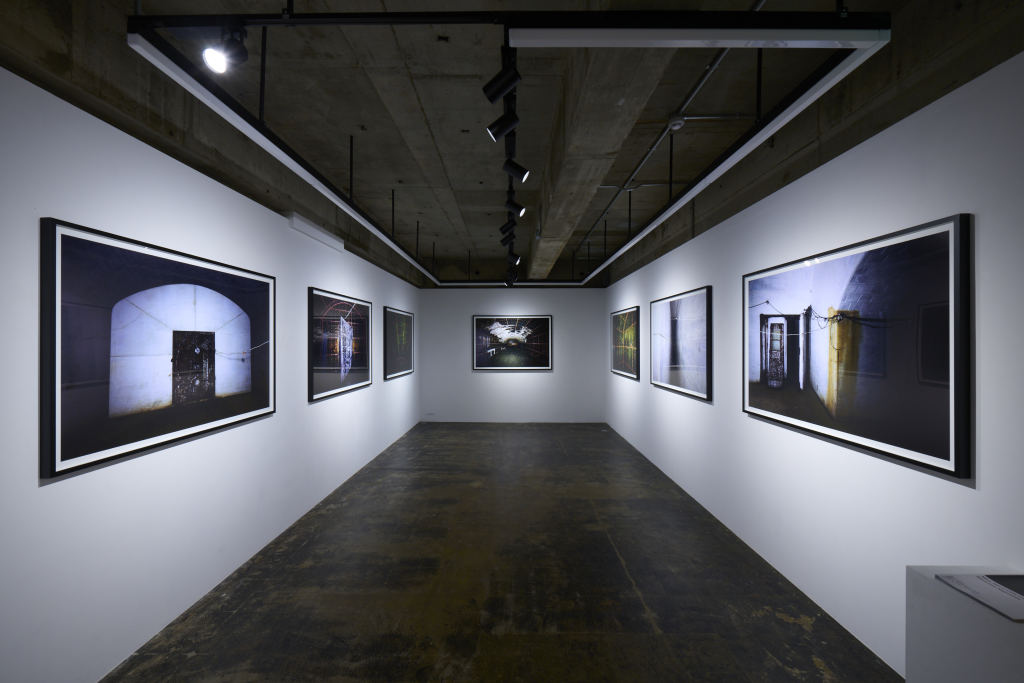
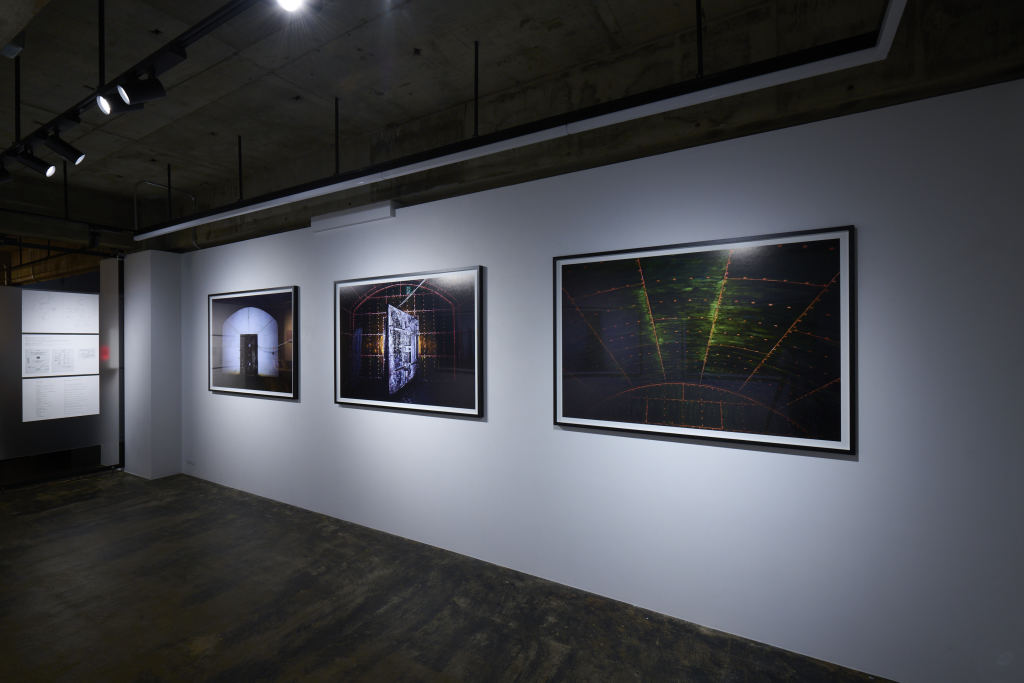
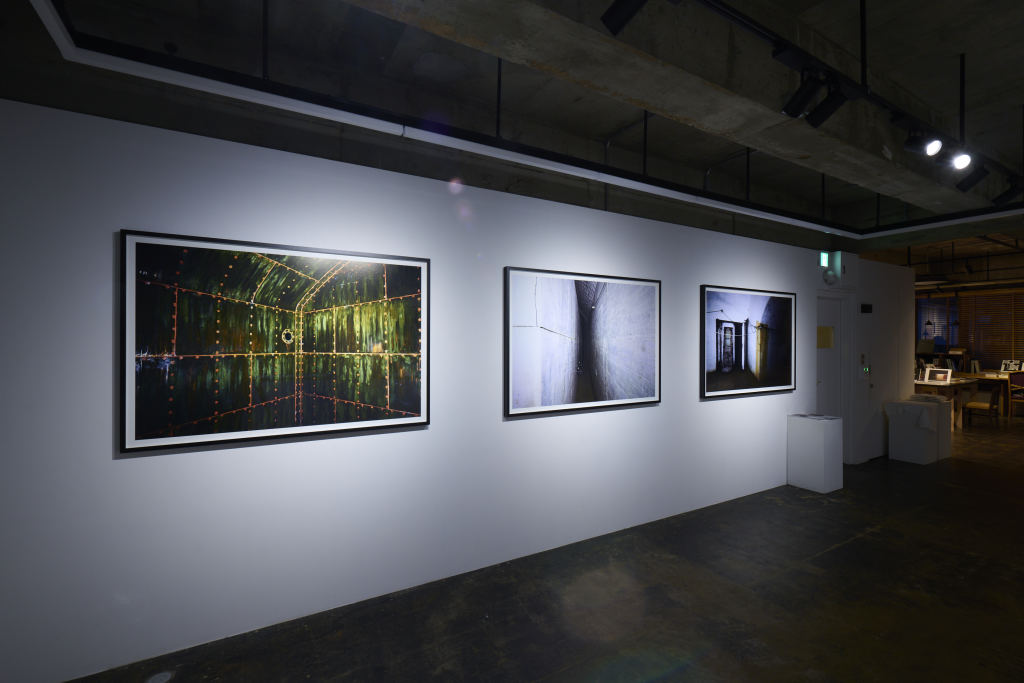
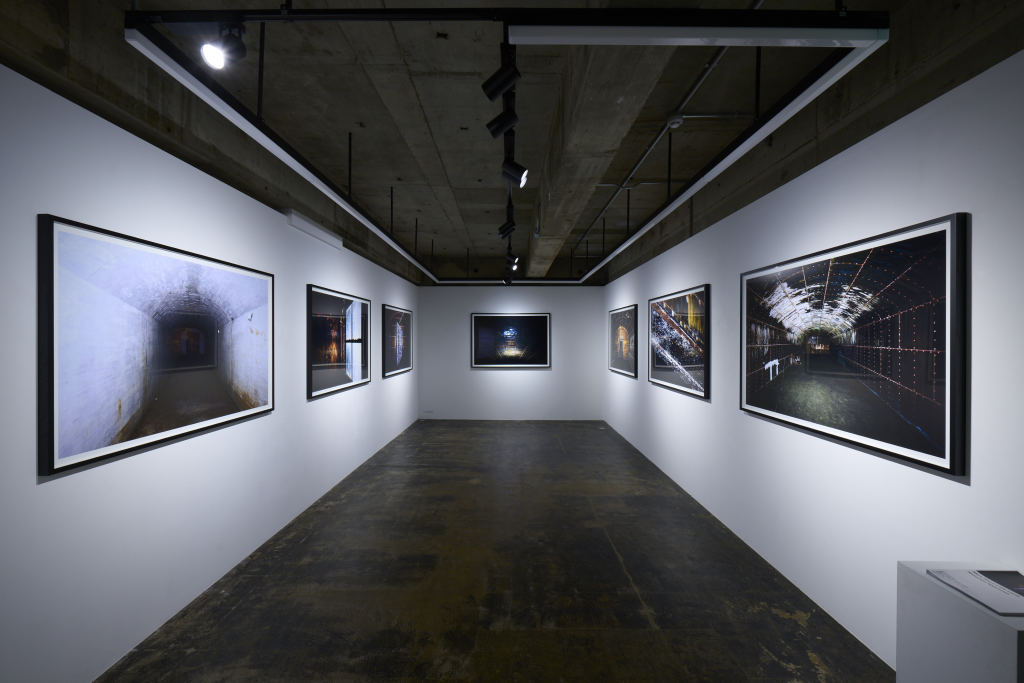
Mary Had a Little Lamb at PURPLE
2025.8.1~8.31 休廊(月・火・8.11~15) at PURPLE《展示入れ替えあり》
前期:8月1日[金]-8月10日[日]
後期:8月16日[土]-8月31日[日]
PURPLEサイトより
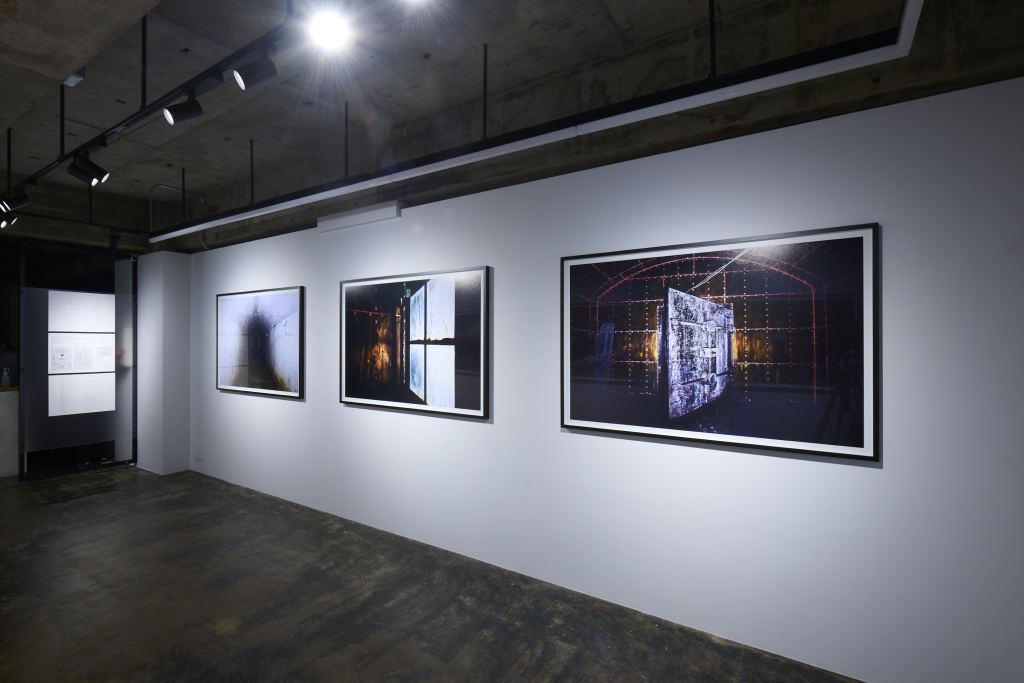
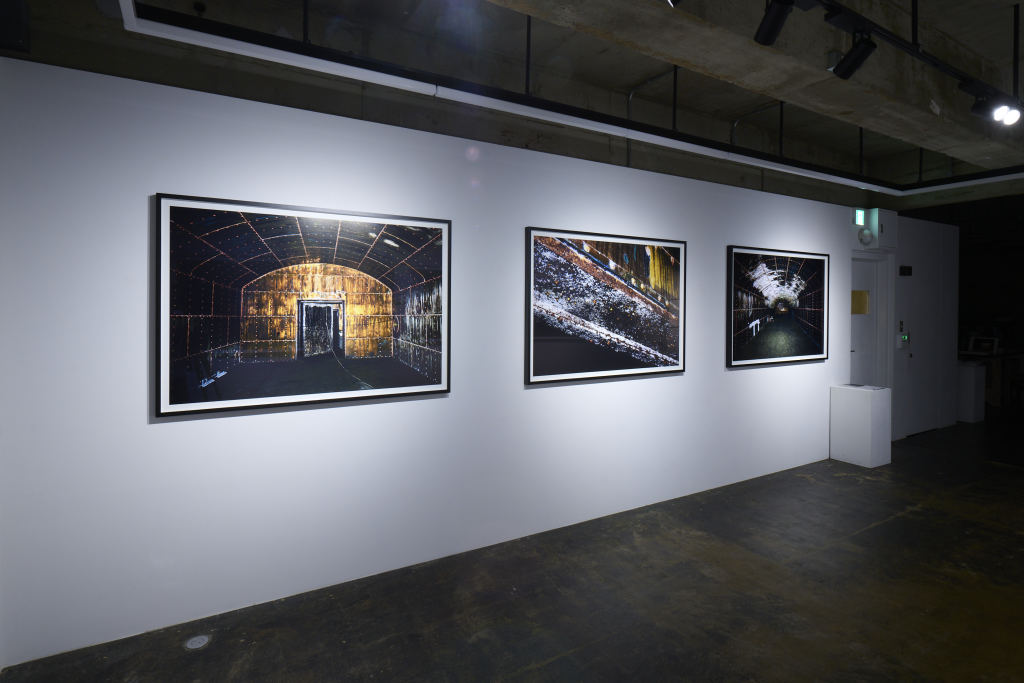
第49回木村伊兵衛写真賞を受賞した本シリーズ『Mary Had a Little Lamb』において、長沢慎一郎は小笠原諸島・父島に残る壕に遭遇し、そこに秘められた「核の記憶」をたどっています。
第二次世界大戦後、アメリカは「抑止力」という名のもと、世界各地に核兵器を配備しました。そのひとつが父島にも存在していたとされ、米軍占領下の23年間、核弾頭が密かに貯蔵されていたといいます。その施設には、アメリカの童謡にちなんだ「Mary Had a Little Lamb(メリーさんの羊)」という名がつけられていました。
長沢慎一郎は2008年から父島に通い続け、前作『The Bonin Islanders』(2021年)では、占領時代に帰島を許された欧米系島民の子孫たちのアイデンティティを丁寧に記録しました。本作はその延長線上にあり、彼らの証言やアメリカの研究者ロバート・ノリスらの調査を手がかりに、壕の内部にカメラを向けています。
白く塗装された密閉空間、銅板に覆われた壁、腐食した鉄扉。そこには「空」であるがゆえの重さがあり、写真は失われた時間と記憶を静かに、しかし圧倒的な存在感をもって伝えてきます。
作品の合間には、海辺の光や椰子の木が挿入され、暗がりの中にかすかな余白を与えています。過去の出来事にとどまらず、今なお続く核の脅威とどのように向き合うかを問いかける本作は、私たちに見えない「空洞」としての歴史と、そこに宿る記憶を見つめ直すきっかけを与えてくれます。
__________
本展にあたり横浜美術館館長 蔵屋美香さんより書評をいただきました。
会場ではリーフレットとしてお持ち帰りいただけます。
__________
羊を見ることはできるか? : 長沢慎一郎 「Mary Had a Little Lamb」 について
横浜美術館 館長 蔵屋美香
写っているのは、打ち捨てられた倉庫のような空間です。ここはどこなのか、何を納めるための場所なのか。意図的に隠され、忘れ去られたものを写真により可視化して、これが何なのか見る人に考えてほしいと作家は言います。
「Mary Had a Little Lamb」(2024年)は、小笠原諸島(英名: Bonin Islands)の父島を舞台とする作品の第二部にあたります。第一部は、この島の「欧米系」と呼ばれる人びとを写した「The Bonin Islanders」(2021年)です。
父島は特異な歴史を持っています。1830年、無人だったこの島に最初に定住したのは、イギリス人、アメリカ人、デンマーク人、ハワイ先住民からなる20数名の移民団でした。1876年には日本の領土となり、6年後に全員が日本国籍を取得。第二次世界大戦中には、日本軍の要塞となったこの島から本土への疎開が行われ、「欧米系」島民は激しい差別を受けました。島は敗戦後の1946年からアメリカの統治下に置かれました。1968年の日本返還までの間、帰島を許されたのは、本土で生きることの困難を訴えた「欧米系」島民129名のみでした。
「The Bonin Islanders」に登場する多くは、統治時代の前後に生まれた人びとです。
アメリカ海軍発行の出生証明書や旅行許可証に「皮膚の色または人種」として記された「Bonin Islander」を自らの拠り所としています。日本人の住めない島に住むがアメリカ人ではない、という特殊な事情から設けられた区分です。アメリカ人ではないとされたものの、アメリカの大きな力に守られた統治下の22年は、コミュニティが傷ついたアイデンティティを立て直すための大事な期間だっただろうと想像します(1)。
この豊かな暮らしの背後で、アメリカは、1956年2月から65年12月までの10年間、父島に核弾頭とミサイルを配備していました。父島は、冷戦下のアメリカにとって戦略上重要な位置を占めていたのです(2)。長沢が撮影したのは、アメリカが旧日本軍の清瀬弾薬本庫を転用して核兵器を格納した「Kiyose vaults」の一部です。この事実は極秘とされましたが、島民の多くは気付いていました。「Mary had a little lamb (メリーさんの羊)」とは、ここにあった核弾頭の愛称です。
二つのシリーズにはこのように、端正な画面を眺めるだけでは読み取れない複雑な背景があります。自ら調べ、知ろうとしない限り、シリーズを十全に理解することはできません。しかしまた、「何が」写っているのかの知識の獲得は、それが「いかに」視覚化されているかに依拠します。つまり、写真が視覚にまつわる表現である以上、「何が」を知ることと同じぐらい、「いかに」について考える必要があるのです。
この点を写真集『Mary Had a Little Lamb』によって見てみましょう(3)。まず現れるのは、大きなヴォールト天井と、その下にある頑丈な扉がついた倉庫のような、いわば建物内の建物です。次いでこの倉庫を、壁一面に銅板が張られた内側から捉えたショットが出てきます。ここから先は、腐食が進む銅板やリベット、扉を覆うサビなどのクローズアップが続き、徐々に空間の全体像は捉えがたくなっていきます。
中には、天井の同じ場所を同じ構図で写した一対のイメージもあります。しかし一対は、色もディテールもかなり異なって見えます。60年前に放棄されたこの場所には電気がきていません。長沢は、その都度軍用のライトで必要な場所を照らしながら撮影を行いました。
つまり2枚の画像の差異は、その時の光のあたり具合と、カメラがそこからどんな情報を読み込んだかにより生じているのです。
最初に述べたように、長沢は、忘れられ、不可視になったものを可視化しようと試みます。しかし「Mary Had a Little Lamb」では、まず、画面に姿が残るのは光が当たった部分のみです。次に、その見え方は時々の光と機材によって変化します。加えて、カメラが腐食やサビなどの細部に寄るたび、光の外にある空間は闇に消えます。思えば父島のシリーズ全体がわたしたちに呼びかけるのは、見えないものが写真によって可視化されている、だから目を凝らそう、ということではないのかもしれません。むしろそれは、カメラが捉え、写真として見せるものを疑い、そこに写らなかったものを想像しようと静かに訴えかけるのです。
「Bonin Islanders」に写る人びとはみな、島の明るい陽光のもとでポーズを取っています。
背景には、星条旗のある庭の一角や、英語の店名を掲げた米軍住宅風の建物など、彼らにとって大切な場所があります。しかし、この画面の外には、長沢があえてフレームからはずした、アメリカ時代の痕跡が失われつつある父島の日常が広がっています。また、彼らのいる場所が光に照らされてくっきりと見えれば見えるほど、当然ながら、 その持続を裏で支えた核の存在は意識の闇に沈みます。「Mary Had a Little Lamb」で長沢は、他ならぬその闇にあかりを持ち込みました。しかしカメラが捉えたのは、一瞬の光に浮かび上がる幻のような画像でした。
童謡「メリーさんの羊」の日本語の歌詞で、いてはならない学校に入り込んだ羊は、先生に追い出され、どこかに姿を消します。父島に関する二つのシリーズは、わたしたちに、羊はどこへ行ったのか、考え続けるよううながします。多くが闇に隠され、見えるものもあやふやだからこそ、わたしたちは知りたい、見たいという欲望に駆られます。不可視の過去を見ようとすることは、未来を見ることにつながっています。
註
1. 戦中戦後の欧米系島民については次に詳しい。David Chapman, “Different Faces, Different Spaces: Identifying the Islanders of Ogasawara,” Social Science Japan Journal, Vol. 14, No. 2 (Summer 2011), pp. 189-212.
2. 父島の核兵器配備については次を参照。真崎翔「米国の核戦略に組み込まれた小笠原諸島」『同志社アメリカ研究』第50 号、同志社大学アメリカ研究所、2014 年3 月、47-68、および、信夫隆司「小笠原返還における核持ち込み問題」『政経研究』第54 巻第2 号、公益財団法人政治経済研究所、2017 年9 月、pp.1-41. 信夫によれば、1968 年の返還時、将来的な有事の際の核兵器再配備をめぐり、日米で議論が交わされたという。
3. 長沢慎一郎『Mary Had a Little Lamb』赤々舎、2024 年。林規章のブックデザインは、右ページの「見えるもの」に対して左ページを黒一色とし、「見えないもの」を表している。
Can We See the Lamb? On Shinichiro Nagasawa’s “Mary Had a Little Lamb”
Director, Yokohama Museum of Art Mika Kuraya
What is depicted is a space that resembles an abandoned warehouse. Where is this place, and what was it used to store? The artist states that he wants viewers to contemplate what these images represent—by visualizing things that were intentionally concealed and forgotten through photography.
“Mary Had a Little Lamb” (2024) is the second part of a body of work set on Chichijima in the Ogasawara Islands (Bonin Islands).The first part is “The Bonin Islanders” (2021), which captures portraits of the people on this island who are referred to as “Westerners.”
Chichijima has a singular history. In 1830, the first settlers on the then-uninhabited island were a group of twenty-some immigrants consisting of British, American, Danish, and Native Hawaiian individuals. The island became Japanese territory in 1876, and six years later, all residents acquired Japanese nationality. During World War II, Chichijima became a Japanese military stronghold, and evacuations to the mainland took place. The “Western” islanders faced severe discrimination. After Japan’s defeat, the island came under American administration in 1946. Until its return to Japan in 1968, only 129 “Western” islanders, who appealed that life on the mainland was too difficult, were permitted to return to the island.
Many of the subjects in “The Bonin Islanders” were born before or under the U.S. occupation. They identify with the designation “Bonin Islander” noted as “Color or Race” on birth certificates and travel permits issued by the U.S. Navy. This label was created under the unique circumstance of their living on an island where Japanese citizens were prohibited, yet they themselves were not considered American. Although they were not regarded as Americans, the 22 years under U.S.governances—hielded by American power̶must have been a crucial period for restoring a wounded community identity. (1)
Behind this seemingly abundant life, however, the U.S. deployed nuclear warheads and missiles to Chichijima for a decade, from February 1956 to December 1965. Chichijima held strategic importance for the U.S. during the Cold War. (2) Nagasawa photographed part of the “Kiyose vaults,” a storage facility where the U.S. repurposed an old Imperial Japanese Army ammunition depot to store nuclear weapons. While this fact was kept top secret, many of the islanders were aware of it. “Mary had a little lamb” was the nickname for the nuclear warheads stored there.
Both series possess such complex backstories that cannot be read simply by looking at the composed images. Without conducting research or actively seeking knowledge, one cannot fully understand these works. At the same time, understanding “what” is depicted hinges upon “how” it is visualized. In other words, because photography is a medium tied to the visual, it is just as important to contemplate the “how” as it is the “what.”
Let us examine this point through the photobook Mary Had a Little Lamb. (3) The opening images show a vaulted ceiling and, beneath it, a warehouse-like structure fitted with heavy-duty doors̶essentially a building within a building. Then comes a shot from the interior of the structure, showing walls entirely covered in copper plates. From there, the book shifts to close-ups: corroded copper, rivets, rust-covered doors. As the images progress, the spatial overview becomes increasingly difficult to grasp.
Among the pages is a pair of images taken from the same angle of the same ceiling, yet they appear noticeably different in color and detail. This location, abandoned sixty years ago, has no electricity. Nagasawa used military-grade lights to illuminate only the necessary areas as he shot. The differences between the two images result from how the light fell at the time and how the camera read that light.
As stated at the beginning, Nagasawa attempts to make visible that which has been forgotten and rendered invisible. Yet in Mary Had a Little Lamb, what remains in the frame is only what was illuminated. Furthermore, how it appears changes depending on the lighting and the camera used. And each time the camera closes in on corroded details or rust, the space beyond the light recedes into darkness. Perhaps what the Chichijima series as a whole calls upon us is not simply to believe that invisible things have now been made visible by photography and to try to look more closely. Rather, it quietly urges us to question what the camera captures and shows̶and to imagine what lies beyond its frame.
The people depicted in “The Bonin Islanders” are all posing under the bright island sun. In the background are significant places for them̶such as corners of gardens with American flags or U.S.-style homes with English signage. But outside the frame, there lies the daily life of Chichijima, where traces of the American era are steadily fading̶intentionally excluded by Nagasawa. The more clearly the subjects in the frame are illuminated, the more the nuclear presence that quietly underpinned their lives recedes into the darkness of our awareness. In “Mary Had a Little Lamb,” Nagasawa brought light precisely into that darkness. Yet what the camera captured was a ghostlike image, fleetingly surfaced by a flash of light.
In the Japanese lyric of the nursery “Mary Had a Little Lamb,” the lamb wanders into school where it doesn’t belong, only to be driven out by the teacher and vanish. The two Chichijima series compel us to keep asking: where did the lamb go? Precisely because so much is hidden in darkness, and even what can be seen is ambiguous, we are driven by the desire to know, to see. To try to see an invisible past is, in itself, a gesture toward seeing the future.
Translated by ChatGPT
Notes
1. For details on Western islanders during and after the war, see David Chapman, “Different Faces, Different Spaces: Identifying the Islanders of Ogasawara,” Social Science Japan Journal, Vol.14, No.2 (Summer 2011), pp. 189–212.
2. For details on the nuclear deployment in Chichijima, see Sho Masaki, “The Bonin(Ogasawara) Islands and the U.S. Nuclear Strategy,” Doshisha American Studies, No. 50, International Institute of American Studies, Doshisha University, March 2014, pp. 47– 68; and Takashi Shinobu, “Bringing in of Nuclear Weapons to the Bonin Islands after their Reversion to Japan,” SEIKEI KENKYU ( Studies in Political Science and Economics ), Vol.54, No.2, the Institute of Politics and Economy, September 2017, pp. 1–41. According to Shinobu, during the 1968 reversion, Japan and the U.S. debated the potential redeployment of nuclear weapons in the event of future conflict.
3. Shinichiro Nagasawa, Mary Had a Little Lamb, Akaaka Art Publishing, 2024. Book design by Noriaki Hayashi. In this design, the right-hand pages represent “what can be seen,” while the left-hand pagesーsolid blackーsymbolize “what cannot be seen.”

Mary Had a Little Lamb at PURPLE
- 日時
- 2025.8.1~8.31 休廊(月・火・8.11~15) 13:00~19:00
- 場所
- PURPLE